

Security Measures in Israel Restrict Worship on Palm Sunday
Israeli authorities have temporarily restricted access to holy sites in Jerusalem’s Old City as missile threats continue to escalate across the region.
Officials say the measures apply equally to Jewish, Christian, and Muslim sites, following multiple attacks this month that have struck near both sacred and residential areas. The restrictions, issued under national emergency guidance, are intended to protect lives amid ongoing danger from incoming fire.
ReadMore

Authorities emphasized that the threat does not distinguish between religions, and neither can their responsibility to safeguard the public.
At the same time, Israeli leaders say they are actively engaging with religious authorities to find a path forward that preserves both safety and freedom of worship during a volatile moment.
Palm Sunday Controversy Draws Global Attention
The restrictions drew international scrutiny after a high-profile incident involving Cardinal Pierbattista Pizzaballa, the Latin Patriarch of Jerusalem, on Palm Sunday.
Initially, the patriarch and several priests were denied entry to the Church of the Holy Sepulchre for a private ceremony—despite guidelines reportedly allowing small gatherings of under 50 people. The decision sparked concern among Christian leaders and observers worldwide.
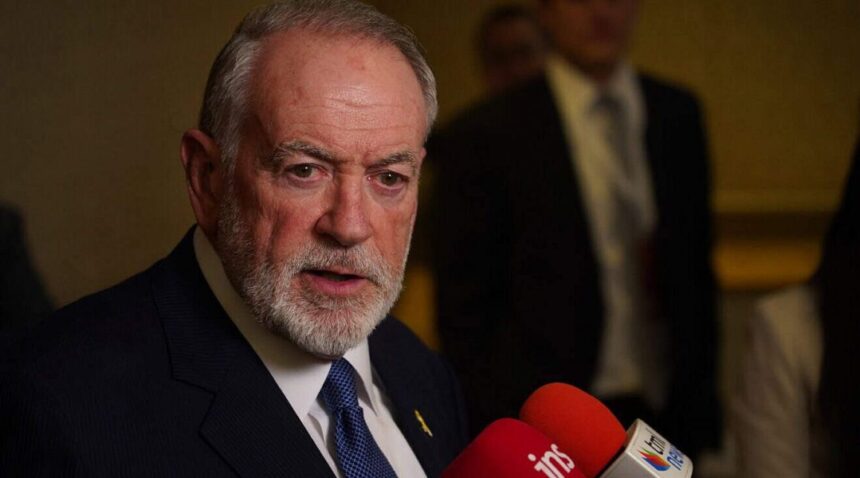
U.S. Ambassador Mike Huckabee publicly criticized the move, calling it an “unfortunate overreach” given the limited number of clergy involved and the global significance of Palm Sunday. He noted that the small group fell well within safety limits and argued the decision was difficult to justify, even amid heightened security concerns.
Huckabee also pointed to the broader context: repeated missile attacks in recent days, including one in which fragments reportedly landed near the Church of the Holy Sepulchre. Israeli officials had urged all faith communities to temporarily refrain from gathering at major holy sites for safety reasons.
Netanyahu Intervenes
The situation was quickly resolved after Israeli Prime Minister Benjamin Netanyahu personally stepped in.
Netanyahu announced that he had directed authorities to grant Cardinal Pizzaballa immediate and full access to the Church of the Holy Sepulchre, ensuring that Christian observances could proceed.
Following the intervention, Ambassador Huckabee expressed appreciation for the swift action, noting that while restrictions remain in place due to ongoing missile threats, allowing private access for Palm Sunday services was a reasonable and appropriate solution.
He added that the issue had been addressed and resolved, highlighting the importance of balancing security needs with religious freedoms—especially during one of Christianity’s most sacred observances.
Israeli officials maintain that the restrictions are temporary and rooted in the urgent need to protect lives amid continued attacks. Dialogue with religious leaders is ongoing, with the goal of accommodating worship wherever safely possible.
Christian Perspective
Palm Sunday marks the beginning of Holy Week—a time when believers reflect on Christ’s journey toward the cross. No matter the circumstances, worship must be given priority, despite any dangers; the government should never decide for Christians to gather in worship – that decision, with proper warning and consideration, should be made by the churches and individuals.
In a city so central to the story of redemption, the tension serves as a reminder to pray for peace (Psalm 122:6) and to look to Jesus Christ, the Prince of Peace, whose kingdom cannot be shaken by war or conflict.