

Pope Leo Denounces War, White House Stands Firm On Prayer For Troops And National Defense
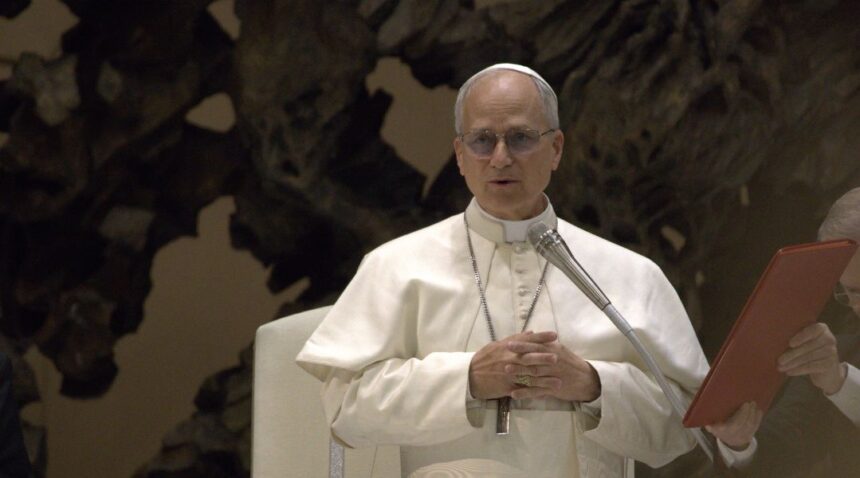
In a striking message delivered on Palm Sunday, Pope Leo declared that God does not hear the prayers of leaders who wage war—drawing a sharp theological and political line as global conflict intensifies.
Speaking before tens of thousands in St. Peter’s Square in Vatican City, the pope called the ongoing war involving Iran “atrocious” and warned against invoking Jesus to justify violence.
ReadMore
“This is our God: Jesus, King of Peace, who rejects war,” Leo said. He went further, quoting Isaiah: “Even though you make many prayers, I will not listen: your hands are full of blood.”
The remarks signal an increasingly hardline stance from the first American pope, who has ramped up criticism of the conflict in recent weeks. He also warned that Christians in the Middle East may be unable to celebrate Easter due to the violence.
Leavitt Defends Prayer For U.S. Troops
White House Press Secretary Karoline Leavitt pushed back, defending both the role of faith in American life and the importance of prayer during wartime.
“Our nation was founded almost 250 years ago on Judeo-Christian values,” she said. “We’ve seen presidents, military leaders, and our troops turn to prayer during the most turbulent times in our nation’s history.”
Leavitt rejected the idea that prayer is incompatible with military action.
“There’s nothing wrong with calling on Americans to pray for those serving overseas. In fact, it’s a noble thing to do.”
A Clash Of Theology: Pacifism Vs. Just War
Leo’s comments reflect a near-pacifist position—suggesting that those engaged in war stand outside the bounds of acceptable prayer.
But that view departs from historic Christian teaching. Augustine of Hippo laid the foundation for Just War Theory, arguing that while war is tragic, it can be morally justified to defend the innocent, restrain evil, and restore peace.
For centuries, this framework has guided Christian thinking—recognizing that in a fallen world, governments sometimes must use force to uphold justice.
Church Vs. Government: Different Callings
At the core of the debate is a critical distinction: the Church and the state are not the same.
The Church is called to preach peace, repentance, and the gospel of Christ. Governments, however, are charged with protecting their people and restraining evil—even when that requires military action.
Blurring those roles risks both bad theology and bad governance.
Christian Perspective
Jesus is the Prince of Peace—but Scripture also commands believers to pray for those in authority and recognizes the role of governing powers in confronting evil.
War should never be celebrated. But neither should Christians deny the reality that force is sometimes necessary to protect the innocent.
Prayer is not reserved for the morally perfect—it is precisely for moments like these. In times of war, believers are called to pray for wisdom, restraint, justice, and ultimately, peace.