


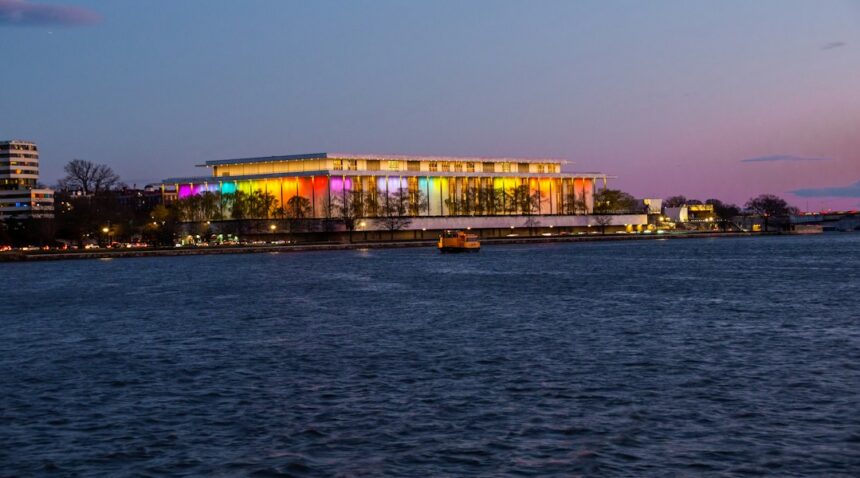
A trustee report says the national performing-arts institution may soon be unable to meet payroll and maintenance expenses as its board prepares to consider its future.
Leaders of the John F. Kennedy Center for the Performing Arts are warning that the Washington institution could be forced to close amid an immediate financial crisis.
A trustee report obtained by The Washington Post says the Kennedy Center may be unable to pay employees or meet maintenance expenses within weeks, according to Reuters reporting published September 14.
The report was prepared for a board meeting scheduled for Tuesday. Reuters had not independently reviewed the underlying documents, and the Kennedy Center did not immediately respond to the news organization’s request for comment.
That makes the warning consequential but still incomplete: the institution’s current cash position, liabilities and available financing have not yet been presented publicly in a complete audited account.
A National Institution Under Pressure
The Kennedy Center opened in 1971 as a living memorial to President John F. Kennedy. It has become one of the country’s most prominent venues for theater, music, dance, opera and national cultural events.
Its current financial problems follow a period of leadership upheaval, legal disputes, canceled performances and declining ticket sales and fundraising.
President Donald Trump became chairman after replacing members of the Kennedy Center’s board in 2025. The reconstituted board later voted to add President Trump’s name to the institution, prompting litigation over whether a congressionally established name could be changed without congressional authorization.
Some artists and organizations withdrew from scheduled performances following the leadership change. Earlier this year, President Trump also proposed closing the center for approximately two years for reconstruction, subject to board approval.
Supporters of major intervention argue that the aging building requires extensive repairs and stronger financial leadership. Critics contend that the political and branding controversies have damaged donor confidence and reduced ticket revenue. A full accounting will be necessary to determine how much each factor contributed to the present crisis.
Naming and Fundraising Questions
According to Reuters’ summary of the trustee report, Kennedy Center leaders argue that prominently acknowledging President Trump’s involvement could help secure his fundraising assistance and prevent financial collapse.
That proposal raises separate legal, governance and donor questions. The Kennedy Center’s trustees must explain what funding has been committed, what conditions are attached and which decisions fall within the board’s legal authority.
A national institution cannot resolve a financial crisis through slogans or personality alone. It requires verified numbers, a lawful recovery plan and confidence that gifts will support the center’s stated public mission.
Why This Matters
The Kennedy Center is both an artistic institution and a steward of public trust. Its possible closure would affect employees, performers, touring productions, arts education and audiences from across the country.
The arts help preserve history, cultivate craftsmanship and give expression to beauty, sorrow, courage and human experience. That cultural importance does not remove the need for financial discipline. It makes responsible management more important.
The board should provide a transparent assessment of the center’s finances, building condition, fundraising outlook and proposed remedies. Accountability should apply regardless of which administration, political faction or prominent donor holds influence.
THRIVE! Perspective
First Corinthians 4:2 teaches that those entrusted with responsibility must prove faithful. Proverbs 27:23–24 likewise commends careful knowledge of what has been placed under one’s care.
Those principles apply to cultural institutions as well as churches, businesses and government agencies. The Kennedy Center’s mission should be protected through truthful accounting, lawful governance and responsible stewardship—not partisan loyalty or hostility.
Beauty and artistic excellence are worth preserving. So are integrity, transparency and public trust.