


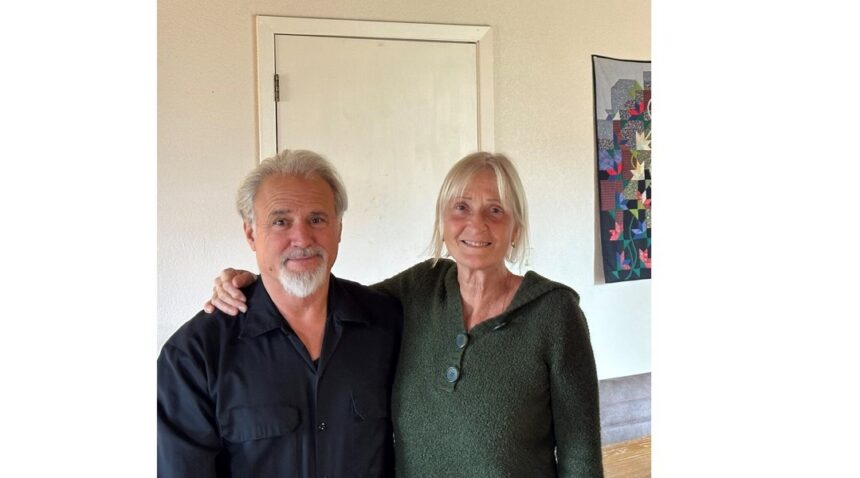
Jeff Woodke’s new memoir describes brutal captivity, unanswered prayers, forgiveness and the faith that remained after his familiar religious formulas collapsed.
American missionary and humanitarian worker Jeff Woodke was preparing to leave Niger and retire when armed men kidnapped him from his home on October 14, 2016.
Woodke was taken from the town of Abalak and transported toward Mali. He would spend the next six and a half years in the custody of extremists affiliated with al-Qaeda.
His new memoir, All the Way Home, recounts the violence of his abduction, the physical and psychological suffering of captivity and the difficult process of returning to his family after his March 20, 2023 release.
Woodke summarizes the spiritual effect of the ordeal with a provocative sentence: “I lost my religion, but gained my faith.”
He does not mean that he abandoned Christ. He says captivity stripped away easy explanations and religious formulas while leaving him with a more fundamental dependence on God.
Years of Isolation and Abuse
Woodke and his family had served in Niger for decades through Youth With A Mission. Their work included digging wells, supporting schools, responding to famine and helping communities restore depleted land.
During his abduction, Woodke says militants beat him with rifles and seriously injured his Achilles tendon. His captors later kept him chained, forced him to sleep outside and moved him through the harsh conditions of the Sahel.
He has described long periods of isolation, inadequate food and exposure to heat, rain and cold. For approximately two months, he says, he was confined in a box measuring roughly four feet in each direction.
The years produced anger, despair and unanswered questions. Woodke continued praying for his wife, children and grandchildren but did not receive the immediate deliverance he desperately wanted.
He was released in 2023 following negotiations involving U.S. and regional officials. Freedom brought joy, but it did not instantly erase the trauma. Woodke has spoken openly about post-traumatic stress and the complicated work of rebuilding ordinary life.
Faith Without Easy Answers
Woodke’s account resists the idea that strong Christians never despair or experience psychological injury. Captivity pushed him beyond the religious answers he had once assumed would be sufficient.
He says that when almost everything else had been taken away, he could not stop loving and praying for his family. He also began to understand forgiveness as freedom from allowing his captors’ hatred to control the rest of his life.
Forgiveness did not make the kidnapping acceptable or eliminate the need for justice. It meant refusing to let evil become the final authority over his identity.
Woodke now works as a hostage advocate and supports efforts to help other captives and their families. His memoir was released September 15 by Zondervan.
Why This Matters
Stories of Christian endurance can be distorted when suffering is cleaned up or presented as a simple path to triumph. Woodke’s testimony includes fear, rage, trauma and questions that were not quickly resolved.
That honesty can serve Christians who mistakenly believe anguish signals spiritual failure. Scripture contains lament as well as praise, and many faithful believers have cried out to God while waiting for deliverance.
Woodke’s experience also directs attention to missionaries, aid workers and local Christians serving in regions where kidnapping and militant violence remain serious threats.
THRIVE! Perspective
Second Corinthians 4:8–9 describes believers as afflicted and perplexed, yet not abandoned by God. Romans 8 declares that suffering, danger and violence cannot separate Christians from the love of Christ.
Woodke’s survival should not be used to imply that every faithful captive will be released. Christian hope ultimately rests in Jesus Christ, not in a guaranteed earthly outcome.
His testimony is powerful because it does not deny the darkness. It proclaims that after brutality had stripped away his certainty and control, God’s love had not released its hold on him.