


The F-15E weapons systems officer known as “Dude 44 Bravo” says faith, training and an extraordinary rescue effort carried him through nearly 50 hours in Iran.
The first message the Pentagon received from a severely injured American airman stranded in Iran was brief: “I’m hurt, I’m moving, God is good.”
The U.S. Air Force colonel, identified publicly only by the mission call sign “Dude 44 Bravo,” recently described his ordeal in his first public interview with 60 Minutes. His identity and certain operational details remain undisclosed for security reasons.
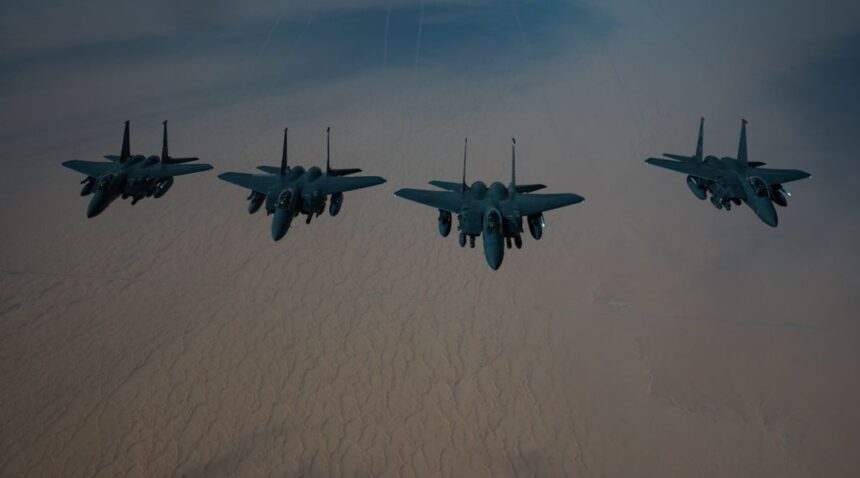
Bravo was the weapons systems officer in the back seat of a two-person F-15E Strike Eagle when an Iranian shoulder-fired missile struck the aircraft in April. His pilot, known as Alpha, initiated their ejection.
The missile had damaged Bravo’s parachute, according to his account. He estimated that he hit the ground traveling between 70 and 100 miles per hour, suffering a broken back, arm and shoulder along with other injuries.
Alpha landed approximately five miles away and was recovered by U.S. forces about six hours later. Bravo remained missing and alone in mountainous terrain.
Injured, Alone and Still Moving
Iranian forces searched for the two airmen as the U.S. military monitored the situation and prepared recovery missions. Military officials told CBS that Iranian personnel at one point came within several hundred yards of Bravo.
Despite his injuries, he moved away from his landing site, climbed toward a high ridgeline and found concealment in the rugged terrain. He had almost no food or water and endured cold nighttime conditions.
When Bravo finally established radio contact, his short message told American officials that he was alive, injured and moving. It also included the declaration that has drawn widespread attention: “God is good.”
Bravo explained that the words expressed his recognition of what God had already brought him through. He later characterized his survival as a “modern-day miracle”—a description representing his personal testimony of faith rather than an official military finding.
The rescue was delayed when conditions did not align for an immediate operation. CBS reported that the final effort involved more than 90 American service members on the ground, hundreds in the air and thousands in supporting roles.
U.S. forces reached Bravo approximately 50 hours after the aircraft was shot down. He was extracted as the sun rose on Easter Sunday.
More Than One Man’s Survival
Bravo emphasized that he does not want the account to focus exclusively on him. He credited Alpha, military training, intelligence work, senior leaders and the service members who entered hostile territory to bring him home.
The operation also illustrates the extraordinary resources and risks involved in recovering personnel from enemy territory. Those facts deserve careful examination alongside the personal testimony now being shared.
Bravo’s survival does not answer every strategic question about the conflict or imply divine approval of every wartime decision. It does, however, offer a vivid account of courage, gratitude and faith under circumstances few people will ever experience.
Why This Matters
Military reporting often reduces operations to aircraft, weapons, maps and casualty figures. Bravo’s testimony reminds Americans that every mission involves people with families, fears, convictions and physical limits.
His recovery also demonstrates the seriousness of the military promise not to abandon a fallen service member. The personnel who accepted enormous risks to find him deserve recognition alongside the officer whose life they saved.
THRIVE! Perspective
Psalm 107 calls those delivered from danger to give thanks to the Lord and tell what He has done. James 1:17 teaches that every good and perfect gift ultimately comes from God.
Bravo responded to survival not by presenting himself as invincible, but by acknowledging God and the people who came to his aid. Christians can receive that testimony with gratitude while continuing to pray for service members, families and leaders making grave decisions in wartime.
“God is good” is not a slogan promising believers an escape from every hardship. It is a confession that God’s character remains trustworthy—even when circumstances are painful, dangerous or beyond human control.