


New Reforms to Restore Spiritual Strength in Military Chaplain Corps
Secretary of War Pete Hegseth has taken decisive steps to revitalize the U.S. military’s Chaplain Corps, emphasizing a return to its foundational role in providing spiritual guidance to servicemembers.
In a video announcement released on December 17, Hegseth addressed a longstanding issue: the degradation of the Chaplain Corps under influences of political correctness and secular approaches.
“I’m here to tell you about a real problem facing our nation’s military. It’s one you’re probably not aware of, but it’s a really important one, and it’s been going on for far too long. The weakening of our Chaplain Corps,” Hegseth stated.
He highlighted the historical significance of the Corps, noting, “Chaplains are intended to be the spiritual and moral backbone of our nation’s forces. George Washington established the Chaplain Corps in 1775, one of his first actions as general of the Continental Army. Congress authorized chaplains for the Navy that very same year.”

Quoting Washington’s general orders, Hegseth added: “The blessing and protection of heaven are at all times necessary, but especially so in times of public distress and danger.”
For nearly two centuries, the Corps served effectively, but Hegseth revealed that recent decades have seen its role diminished. “In an atmosphere of political correctness and secular humanism, chaplains have been minimized, viewed by many as therapists instead of ministers. Faith and virtue were traded for self-help and self-care.”
As evidence, he critiqued the current Army Spiritual Fitness Guide: “In well over 100 pages, it mentions God one time. That’s it. It mentions feelings 11 times. It even mentions playfulness, whatever that is, nine times. There’s zero mention of virtue. The guide relies on new age notions, saying that the soldier’s spirit consists of consciousness, creativity, and connection… Yet, ironically, it alienates our war fighters of faith by pushing secular humanism. In short, it’s unacceptable and unserious. So, we’re tossing it.”
Hegseth revealed he signed a directive that day to “eliminate the use of the Army Spiritual Fitness Guide effective immediately.” He declared, “These types of training materials have no place in the war department. Our chaplains are chaplains, not emotional support officers, and we’re going to treat them as such.”
Additional changes include simplifying the faith and belief coding system, which had expanded to over 200 codes, with most servicemembers using only a handful.
“More reforms will be coming in the days and weeks ahead. There will be a top-down cultural shift, putting spiritual well-being on the same footing as mental and physical health,” Hegseth promised. He referenced the 1956 Army Chaplain’s Manual: “The chaplain is the pastor and the shepherd of the souls entrusted to his care.”
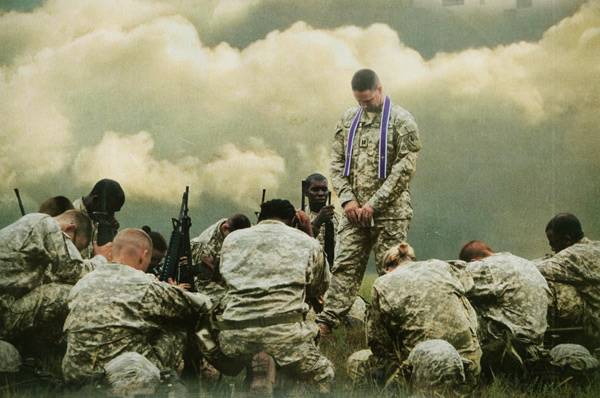
Concluding, he affirmed: “This is a high and sacred calling, but this only works if our shepherds are actually given the freedom to boldly guide and care for their flock… We are going to make the Chaplain Corps great again. And merry Christmas.”
The Religious Liberty Commission has strongly endorsed these actions.
“The Religious Liberty Commission applauds Secretary Hegseth and the Department of War’s quick action to restore the military chaplaincy to its full strength and influence in our armed forces,” stated Religious Liberty Commission Chairman, Texas Lt. Gov. Dan Patrick. “As we were reminded at our Commission hearing last week, the chaplaincy is foundational to the American military—a source of spiritual strength so that our servicemembers continue to serve as a force for good in the face of evil and oppression. Tragically, past administrations sought to undermine the spiritual and strategic role of the military chaplaincy.”
Patrick noted testimonies from military chaplains, former Navy SEAL Blake Martin, Kenny Vaughan of Shields of Strength, historian Dave Barton, and others. “We commend President Trump and Secretary Hegseth for their leadership in executing these much-needed reforms, which we know will continue to make America, and our military, great again.”
Commission Vice-Chair Dr. Carson added: “Faith is a cornerstone–a bedrock freedom–in our country. Secretary Hegseth has courageously countered attempts to ‘replace real religion with social religion.’ By doing so, he is ensuring that our servicemembers will receive the spiritual freedom and support they need to defend our country with a spirit of ‘power, love, and a sound mind.’”
Associate Attorney General Stanley Woodward stated: “Our servicemembers are faced with life-and-death decisions on a daily basis. To manage the constant pressure and danger, they must have the ability to see their work through an eternal perspective. The Chaplain Corps, established by General George Washington, has long supported soldiers in cultivating this ability, offering critical moral and spiritual formation. Yet, past administrations degrade this vital ministry into a vague program of ‘feelings management,’ rather than a rigorous grounding in authentic, selfless, and courageous faith. I am grateful for Secretary Hegseth’s clear-sighted leadership and decisive action to ensure the Chaplain Corps and the Army Spiritual Fitness program are restored to their full strength.”
Commissioner Bishop Robert Barron said: “As a member of the Commission on Religious Liberty, I applaud the announcement from Secretary Hegseth that military chaplains will be permitted to speak clearly about God and the things of God. For too long, chaplains have been compelled, out of concern for political correctness, to operate more as psychological counselors then as representatives of their religious traditions. This restriction effectively compromised their religious liberty and that of the soldiers, sailors, and airmen they serve. So, I am pleased to see this change.”
Why This Matters: A Christian Perspective
These reforms mark a crucial restoration of authentic faith in the military, reversing trends that sidelined spiritual truth in favor of secular alternatives. From a Christian standpoint, they echo Scripture’s call for spiritual readiness, as in 2 Timothy 1:7, granting “a spirit not of fear but of power and love and self-control.” By empowering chaplains to proclaim the name of Jesus boldly and grounding servicemembers in eternal truths, this shift equips warriors to face adversity with divine strength, moral courage, and the hope of Christ—essential for a military that protects freedom rooted in godly principles.