


The Forgotten Virtue of Moral Courage in an Age of Pressure and Division
As a young boy, I learned about the courage of early American heroes, but later learned that moral courage has greater requirements and demands a deeper commitment.
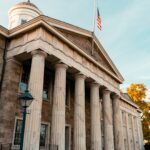
At the age of seven, I distinctly remember standing on the courthouse steps in Jackson, Tennessee, the area where the legendary pioneer-statesman-soldier David “Davy” Crockett was from. Crockett served in Congress twice and lost the second time chiefly because President Andrew Jackson — another Tennessee legend — didn’t like that Crockett opposed his forced removal of Native Americans, with Crockett standing against the Trail of Tears.
Although my dad was in the Air Force, he always made sure we spent at least four weeks a year in West Tennessee. During our regular family visits, my Uncle “Buddy” would take me under his wing and walk me around to learn about family, service and lost lessons for so many in the next generations.
On one particular trip, Uncle Buddy led me up the courthouse steps. The scene was classic Southern: courthouse in the middle, streets all around, storefronts lining the square. He pointed to a spot and said, “Roby, I want you to know that right here is where Davy Crockett said, ‘Y’all can all go to hell — I’m going to Texas.’” That sticks with a kid. Of course, I later learned, Crockett died defending Texans from the Mexican invasion at the Alamo. The more things change, the more they remain the same.
Davy Crockett, like so many legendary Americans, lives on as folk heroes tend to do because they were commoners with no wealth, particular genius or aristocratic privileges. They were given no chance, so they took it. The American way doesn’t ask for permission. But when we’re told we can’t, shouldn’t or won’t do something, we take that only one way: it’s an invitation to winning.
Crockett resonates with me because his life mirrored the people I knew best growing up — my family, my neighbors and the folks of West Tennessee. My dad’s people migrated over from western North Carolina in the early 1800s and settled in West Tennessee. So, when I read about Crockett, I saw in my grandpa, my uncles, my brothers and myself, the fierce independence and the refusal to say, “I can’t.” That stubborn streak of self-reliance… It’s in all of us down there, sometimes to a fault.
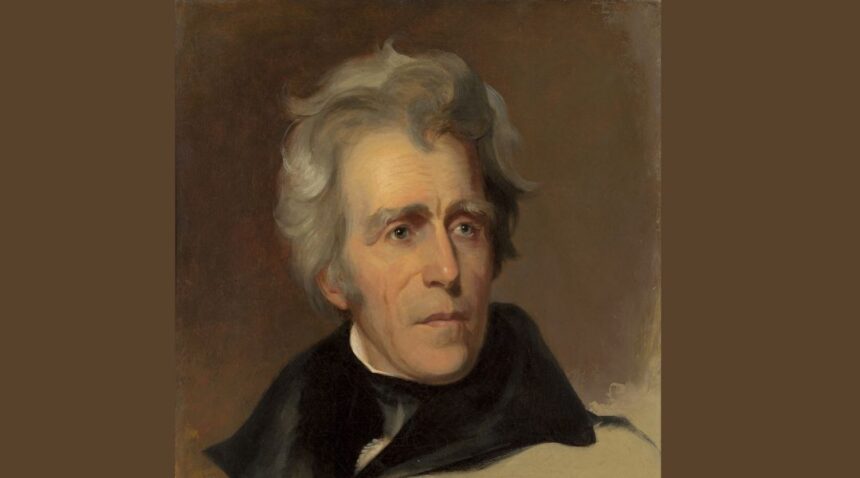
What set Crockett apart for me, though, was his willingness to push back against power, even against someone like President Andrew Jackson. Jackson was another figure I admired, so at first you’d think they’d be natural allies. They were, early on, but when Jackson pushed for the forced relocation of the Cherokee people, Crockett stood up and opposed him, a move that took guts and cost him politically. But he stood on principle. I admire that.
The first story I ever read was about Andrew Jackson, which occurred when he was just 14 years old, fighting in the American Revolution. He was captured by the British, beaten badly, but he survived and lived to keep fighting.
Jackson’s whole life is a story of overcoming obstacles. He became a lawyer without going to law school, apprenticing instead. He didn’t come from privilege; he worked for everything he had. It was the same with his military career. Jackson didn’t have a straight shot to success. He had failures and setbacks, but he kept going, kept fighting.
So, it’s not Jackson’s policies that lead me to admire him, although I do think he was a better president than historians give him credit for. It’s who he was: a man who saw obstacles and figured out a way through them. In this way, Andrew Jackson shares similarities with President Trump. Both men fought the establishment, both were hated by the elites, and both were willing to take punches and keep swinging.
When we’re young, we think courage is the kind Davy Crockett showed at the Alamo — physical courage, facing bullets and bayonets. But I’ve come to realize the hardest kind of courage is moral courage. The courage to make the right call — not in the face of gunfire, but in the face of peer pressure, government oppression and public ridicule. The kind of courage it takes to tell a group of young men and women to do something you know may get them killed — because it’s necessary for the mission, for the cause and for the country.
The courage we need the most in our lives is moral courage, and we all need to cultivate that now more than ever. Especially at this moment, when the United States Supreme Court has declared race-based congressional districts are unconstitutional, and the proper response is easily made in states like Mississippi, Alabama and South Carolina if legislators will find the courage to do the right thing and redistrict according to the Constitution.
Col. Rob Maness, USAF-ret., is a decorated combat veteran and dynamic leader with over 40 years of experience steering complex organizations through high-stakes challenges. During his military service, Maness received eighteen major awards and decorations, including the Legion of Merit twice and a Bronze Star for combat leadership. Through Iron Liberty Group (2013-present), Maness consults, hosts “The Rob Maness Show” on the WorldViewTube Network, and drives digital initiatives, showcasing entrepreneurial adaptability. His leadership — forged in combat, proven in turnarounds and fueled by a knack for inspiring teams — marks him as a force for action and impact in any arena and is showcased in his book: “What You Can Do About It — Taking Real Action Against Corruption, Radicalism, and Moral Decay to Save America