

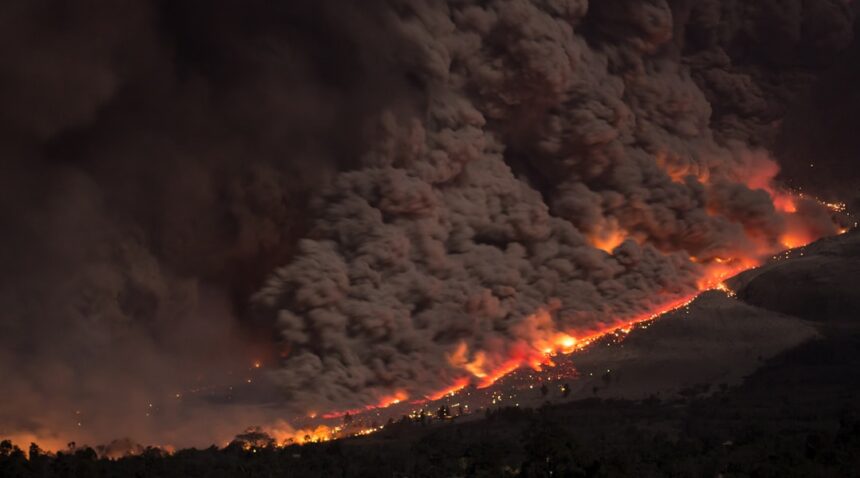
Intense forest and peat fires are threatening public health, disrupting education and spreading smoke across Southeast Asia.
Indonesia’s forest and peat fires produced an estimated 19.7 million metric tons of carbon dioxide from September 1 through September 7—more than one-third of global fire emissions during that period, according to satellite-based monitoring reported by Reuters.
The emissions were approximately 273% above the seasonal average, with major fire activity across Borneo and Sumatra. Prolonged heat and drought have dried peatlands and vegetation, creating conditions in which fires can spread underground, resist suppression and produce dense smoke for extended periods.
Children and vulnerable residents face immediate risk
Air quality reached hazardous levels in some communities. In Pontianak, an air-quality reading of 394 was reported—well into the hazardous range. Schools have shifted students to remote instruction as officials seek to limit exposure; Associated Press reporting placed the number of affected students above 1.4 million.
The consequences extend beyond carbon emissions. Smoke can aggravate asthma and other respiratory conditions, threaten older adults and infants, reduce visibility and disrupt travel. Winds may also carry haze into neighboring countries, making the crisis a regional public-health concern.
Why This Matters
Wildfire statistics represent families breathing dangerous air, teachers trying to continue classes and firefighters working in difficult terrain. Effective response requires immediate protection for residents as well as long-term attention to peatland management, land-clearing practices and prevention.
Technology may become part of that response. THRIVE! recently reported on satellite imaging designed to see through clouds and darkness, capabilities that can support environmental monitoring when conditions obscure the ground.
THRIVE! Perspective
Genesis 2:15 describes humanity’s calling to cultivate and care for creation, while Mark 12:31 commands love for our neighbors. In a disaster, those responsibilities meet in practical action: protecting health, supporting responders and helping families whose ordinary lives have been interrupted.
Christians can pray for rain, safety and wisdom while also giving through trustworthy relief organizations and supporting local churches serving affected communities. Creation care is most credible when it becomes neighbor-care.
Sources
- Reuters: Indonesia wildfire emissions, September 9, 2026
- Associated Press: hazardous haze and school closures, September 9, 2026
- Copernicus Atmosphere Monitoring Service: global fire monitoring