


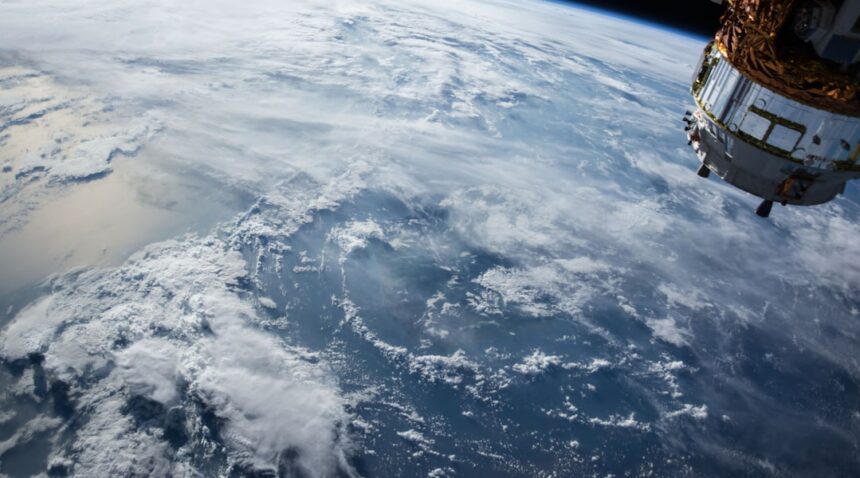
An Indian space startup has secured a U.S. patent for technology designed to produce clearer, more reliable pictures of Earth—even when clouds or darkness obstruct conventional satellite cameras.
GalaxEye, founded by engineers from the Indian Institute of Technology Madras, announced that it has received a U.S. patent for a system that synchronizes optical and radar sensors aboard a satellite.
Optical cameras can produce images that are easy to interpret but are limited by darkness and cloud cover. Synthetic aperture radar can observe the ground in those conditions, but its images require more specialized interpretation. GalaxEye’s approach aligns both forms of data at the same time and from the same location.
Innovation With Practical Reach
The company says its OptoSAR system could support agriculture, insurance, national security and disaster response. Reliable imaging during storms, wildfires and floods can help leaders assess damage even when smoke or clouds hide conditions below.
GalaxEye plans to build a constellation of 30 satellites over the next five years. The company has raised approximately $21 million and recently acquired Bengaluru-based StarOps to expand its manufacturing and engineering capacity.
Seeing Clearly When Conditions Are Difficult
The patent illustrates how private companies are opening new possibilities in a field once dominated almost entirely by governments. Better Earth observation can help farmers monitor crops, insurers assess damage and responders direct limited resources toward communities with the greatest need.
THRIVE! Perspective: Evaluate Innovation by Whom It Serves
Biblical reflection: Genesis 1:28 connects human responsibility with care for the created world, and Mark 12:31 calls us to love our neighbors. Those principles offer a way to evaluate this technology: Can it help protect lives, care for land and direct aid wisely? This is THRIVE!’s worldview assessment, not a claim that GalaxEye or its founders are Christian. Its humanitarian promise should be measured against demonstrated results and responsible use.
Innovation is not valuable merely because it is new. Its worth becomes clearest when knowledge is converted into service—when better tools help people protect life, steward creation and respond wisely in moments of crisis.
GalaxEye’s technology still must prove its performance at commercial scale. But its promise is significant: a more consistent view of the Earth precisely when visibility is hardest to obtain.