

The cases place the constitutional right to worship, lawful protest, press freedom and each defendant’s individual conduct before a federal court.
Defendants charged after an anti-ICE demonstration disrupted Sunday worship at Cities Church in St. Paul, Minnesota, are asking a federal court to dismiss their cases.
The demonstration occurred January 18, when protesters entered the sanctuary during a worship service, chanted near congregants and the pulpit, and continued after being asked to leave. Organizers targeted the church because one of its pastors also held a leadership position with Immigration and Customs Enforcement.
Thirty-nine people were ultimately charged. Federal allegations include conspiracy to deprive worshippers of their civil rights and violations of provisions protecting religious exercise at places of worship from force, threats or physical obstruction.
The defendants are presumed innocent, and the charges are not identical in every case.
What the Defendants Argue
Defense attorneys have advanced several grounds for dismissal. Some defendants contend that the prosecution is selective or politically motivated. Journalists Don Lemon and Georgia Fort argue that they were documenting the demonstration rather than participating in a conspiracy to obstruct worship.
Those claims require the court to examine individual conduct rather than treating every person present as having played the same role. Newsgathering is protected by the First Amendment, but the court will determine whether each person’s actions amounted to reporting, participation or conduct covered by the charged statutes.
Prosecutors maintain that the case is about protecting congregants’ right to worship peacefully, not suppressing criticism of immigration enforcement.
What the Court Must Decide
The anticipated dismissal hearing will focus on the statutes charged, the evidence against each defendant and whether the prosecution complied with constitutional protections.
The court must distinguish between organizers, participants, observers and journalists. It must also determine whether the conduct described by prosecutors meets the legal requirements of the federal offenses.
Until the court rules, the government’s allegations and the defendants’ responses remain competing legal positions. That due-process requirement does not minimize the documented disruption of worship at the center of the case.
Why This Matters
The First Amendment protects the right of Christians to gather and worship without intimidation or political interference. Video and eyewitness accounts show that demonstrators entered Cities Church, interrupted the service, confronted congregants and continued after being asked to leave.
Political disagreement does not grant anyone the right to commandeer a church service. Objections to government policy can be pursued through elections, legislation, courts and lawful public protest—not by invading a sanctuary and disrupting worship.
The court must determine each defendant’s individual legal responsibility, but the right of the congregation to worship peacefully must not be minimized. The case joins other current disputes involving religious liberty and equal constitutional protection.
THRIVE! Perspective
Law and order are foundational to a free society. Romans 13:1–4 teaches that civil government has a God-ordained responsibility to restrain wrongdoing, while 1 Peter 2:13–17 calls believers to respect lawful authority.
Christians are commanded to love and serve their neighbors, including immigrants, but biblical compassion does not require treating duly enacted laws as optional. Those who believe a law should change must pursue that change through lawful means.
Jesus warned that an increase in lawlessness would cause the love of many to grow cold (Matthew 24:12). No political cause—left or right—justifies entering a church, frightening worshippers or obstructing Christians as they gather before God. Religious liberty and public order require that such conduct be taken seriously.
Sources
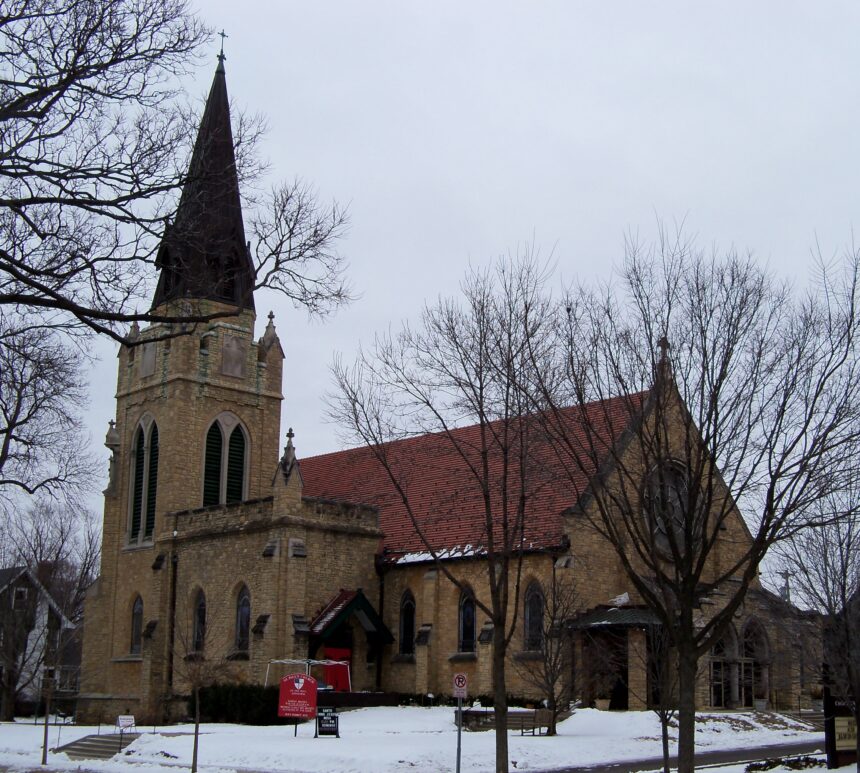
Featured image: The historic St. Paul building now occupied by Cities Church, photographed in 2012. AlexiusHoratius/Wikimedia Commons, CC BY-SA 3.0; display crop may apply.