


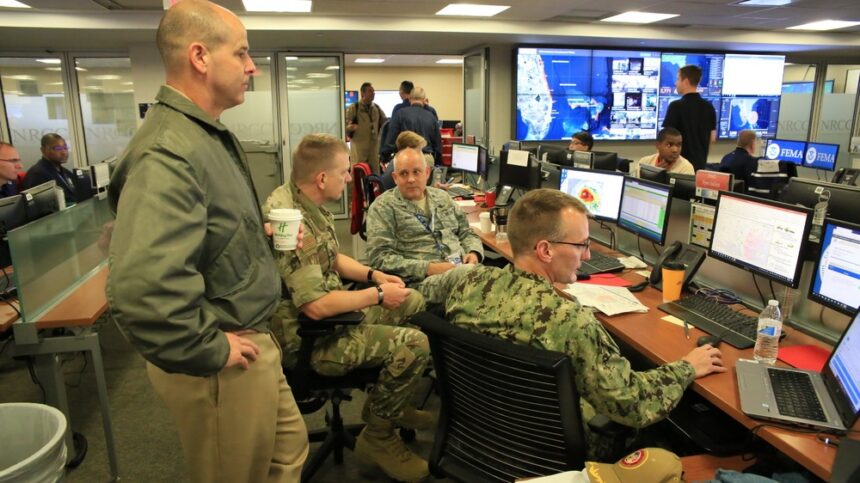
The court found that Homeland Security exceeded its statutory authority, while the practical remedy remains unresolved.
A federal judge has ruled that the Department of Homeland Security acted unlawfully when it directed the Federal Emergency Management Agency toward a 50% reduction in staffing and prevented the renewal of contracts for thousands of on-call disaster responders.
U.S. District Judge Susan Illston concluded that the directive exceeded DHS authority under the federal law enacted after Hurricane Katrina. That law limits the department’s ability to substantially diminish FEMA’s responsibilities, functions or authority.
The ruling does not establish FEMA’s ideal staffing level, nor does it prevent elected leaders from pursuing lawful reforms. It finds that this particular reduction plan conflicted with the authority Congress granted the agency.
The Disputed Workforce Plan
FEMA relies on permanent employees as well as reservists who can be activated after hurricanes, floods, wildfires and other emergencies. Those responders support disaster assistance, logistics, recovery centers and coordination with state and local governments.
The challenged plan moved FEMA toward cutting its workforce in half and restricted the renewal of temporary contracts. The court found that the 50% target lacked an adequate explanation and would substantially affect the agency’s ability to carry out responsibilities assigned by Congress.
The administration has argued more broadly that states should assume greater responsibility for disaster response and recovery. The ruling does not settle that policy debate. It addresses whether DHS followed existing federal law while attempting to restructure FEMA.
Some employees have already returned following leadership changes, and the proposed reduction was never fully completed.
What Happens Next
Illston directed the parties to work toward an appropriate remedy. Until that process is complete, the full practical effect of the ruling remains uncertain.
A remedy could address staffing decisions, reservist contracts or future agency directives, but the court had not issued a final operational plan as of publication.
That distinction matters: the judge found the workforce directive unlawful, but she has not designed a new FEMA staffing structure.
Why This Matters
Disaster preparedness can appear abstract until a hurricane makes landfall, a wildfire destroys a neighborhood or a flood isolates a community. Staffing decisions made months earlier can affect how quickly help reaches families during those emergencies.
Churches, ministries and nonprofit organizations frequently provide food, shelter, prayer, volunteers and long-term care after disasters. Their service is indispensable, but they also operate alongside civil authorities responsible for public warnings, infrastructure and emergency coordination.
That partnership was visible in the recovery needs THRIVE! recently covered after Hurricane Lowell struck Kauai.
THRIVE! Perspective
Effective government requires lawful authority and prudent preparation. Romans 13:1–4 recognizes civil government’s responsibility to preserve order, while Proverbs 21:5 commends diligent planning.
Churches should prepare to serve neighbors quickly and compassionately, while civil agencies carry out their distinct public-safety responsibilities within the law.