


The fiscal 2026 shortfall grew as federal spending increased faster than revenue.
The federal government ended fiscal 2026 with a budget deficit of approximately $1.992 trillion, according to Treasury figures reported October 16.
The shortfall was $217 billion larger than a year earlier and the largest since 2021, Reuters reported.
Government receipts reached roughly $5.4 trillion, while spending totaled about $7.4 trillion. Revenue increased approximately 3%, compared with a 6% rise in outlays.
Higher debt-service costs and continued growth in Social Security and Medicare spending contributed to the increase.
The fiscal year ended September 30. Its results measure the government’s finances over that completed period, rather than a forecast for the coming year.
The annual deficit is different from the national debt. A deficit occurs when the government spends more than it receives during a given period. The debt reflects accumulated federal borrowing.
That distinction matters when comparing budget headlines. A smaller annual deficit would still mean additional borrowing if spending continued to exceed revenue; it would not necessarily mean that the total debt had fallen.
The new figures show that rising receipts alone did not close the gap. Spending grew more quickly, leaving the government with a larger annual shortfall.
The report provides a measure of the completed fiscal year’s results. It is not itself a new spending authorization, tax change or decision about future budget policy.
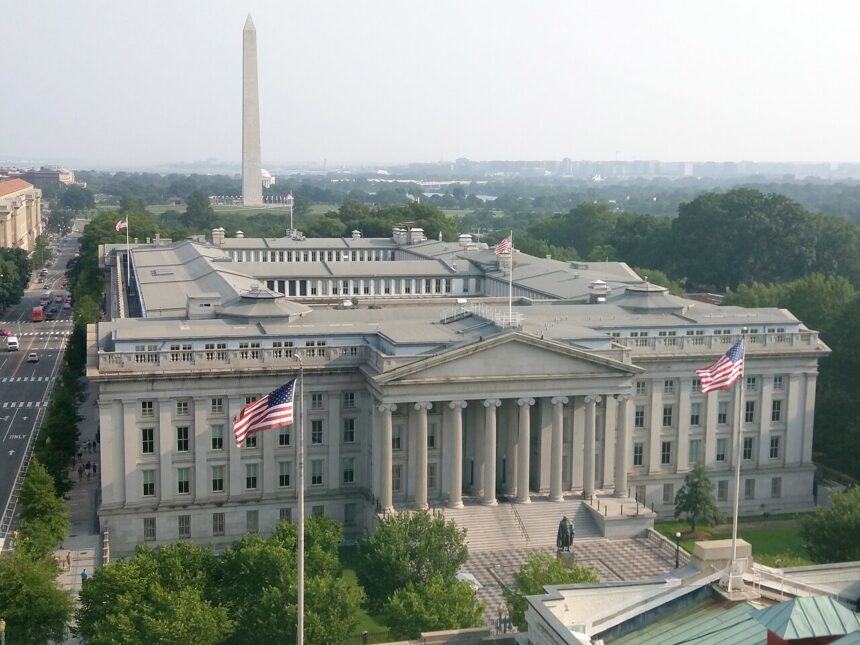
Featured image: U.S. Treasury building, July 2015. Photo: MeanieHyaena / Wikimedia Commons, CC BY 4.0. Resized.
More: THRIVE! Business coverage.