


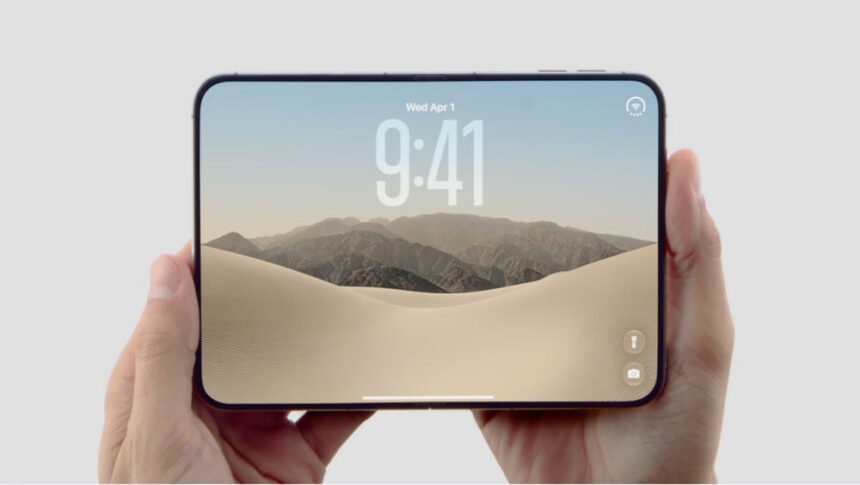
The passport-shaped device opens into a wide display as Apple makes its biggest change to the iPhone’s physical design in nearly a decade.
CUPERTINO, Calif. — Apple unveiled its first foldable smartphone Wednesday, introducing the iPhone Duo as the technology giant seeks to transform a still-small product category into a mainstream consumer market.
The passport-shaped device features a conventional outer screen when closed and opens like a book to reveal a substantially wider display. The interior screen can be used horizontally or vertically, while Apple says the unfolded Duo is its thinnest iPhone yet.
The launch represents Apple’s most significant physical redesign of the iPhone since the company removed the home button with the iPhone X in 2017. It also comes more than seven years after Samsung introduced its first Galaxy Fold, allowing Apple to observe competitors’ successes and struggles before entering the market.
Samsung, Huawei, Google, Motorola and other manufacturers have already invested heavily in foldable devices. Yet foldables accounted for only about 1.6% of worldwide smartphone sales in 2025, leaving Apple with the challenge—and opportunity—of persuading more consumers that the format offers practical value beyond its novelty.
Analysts expect the Duo to enter the market at more than $2,000, making it one of Apple’s most expensive consumer products. That price will test whether customers believe a phone that can also function like a small tablet provides enough additional usefulness to justify the premium.
The stakes are considerable. The iPhone generated approximately $209.6 billion during Apple’s latest fiscal year, accounting for slightly more than half of the company’s total sales. Industry analysts cited by Reuters expect Apple to sell through its initial foldable inventory and potentially capture 40% of the premium foldable market by the end of next year.
Wednesday’s event also marked the first major product presentation led by new Apple CEO John Ternus, who succeeded Tim Cook on September 1. Alongside the Duo, Apple introduced the iPhone 18 Pro and Pro Max, updated Apple Watches and new AirPods.
Apple’s entry could bring more software development, manufacturing investment and consumer attention to foldable devices. Its larger influence may also pressure competitors to improve durability, usefulness and pricing as companies compete for customers.
THRIVE! Perspective
Free enterprise makes room for this kind of innovation. Samsung and other manufacturers accepted the risks of developing early foldable phones; Apple watched the market, refined its approach and must now convince customers that its product creates enough value to justify its price. Consumers—not government planners—will ultimately decide.
That competition can produce better products, lower prices and wider access over time. Human creativity reflects our God-given ability to build and solve problems, but technology should remain a tool that serves people, families and productive work—not an end in itself.