

The president said the United States detected activity at the fortified complex near Natanz, but he provided no public evidence showing what the activity involved.
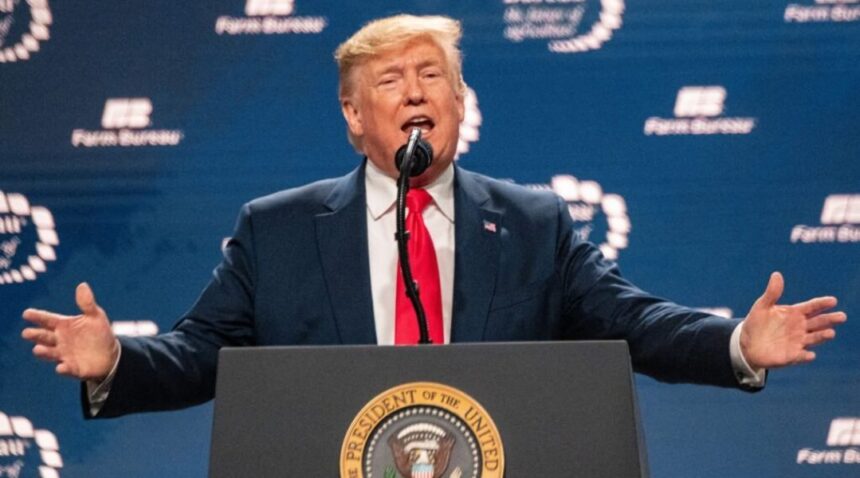
DALLAS — President Donald Trump warned Iran on Wednesday that the United States could strike Pickaxe Mountain, a deeply buried complex near the damaged Natanz uranium-enrichment facility, after American officials detected what he described as new activity at the site.
“We notice there’s a little activity at Pickaxe,” Trump said during his address to the Republican midterm convention in Dallas. He then warned that continued activity could draw a severe U.S. response.
Reuters reported Trump’s remarks. The president did not disclose what intelligence prompted the warning or explain whether the observed activity involved construction, personnel, equipment or nuclear material.
No strike on Pickaxe Mountain has been announced.
What Is Pickaxe Mountain?
Pickaxe Mountain—also known as Kuh-e Kolang Gaz La—is located approximately two kilometers south of the Natanz complex and about 140 miles south of Tehran.
The site contains two tunnel complexes built deep beneath a granite mountain. Iran began developing the facility after an aboveground centrifuge-assembly workshop at Natanz was damaged in 2020, but the underground complex’s intended final use has never been conclusively established in public evidence.
Analysts have described it as a possible protected location for nuclear-related work, including the assembly or storage of centrifuges. Iran maintains that its nuclear program is peaceful.
Unlike Natanz, Pickaxe Mountain was not struck during the 2025 Israel-Iran conflict or during the U.S.-Israeli attacks that began in February 2026, according to the Institute for Science and International Security as cited by Reuters.
Satellite Analysis Shows Increased Construction
A separate analysis of six years of commercial satellite imagery found a substantial increase in visible construction at Pickaxe Mountain during 2026, according to reporting on the satellite findings.
The visible work reportedly includes raising and reinforcing tunnel entrances, paving internal roads, strengthening access areas and removing excavated material. Analysts said the activity is consistent with continued development inside the mountain.
Those images document construction, but they do not establish what is currently inside the tunnels. Publicly available evidence has not confirmed that Iran has moved uranium, operating centrifuges or weapons-related material into the complex.
That distinction is central to the developing story: construction is documented; the exact activity referenced by Trump remains undisclosed.
IAEA Action Adds to Nuclear Scrutiny
Trump’s warning came as international pressure over Iran’s nuclear program intensified.
On Wednesday, the International Atomic Energy Agency’s 35-member board reported Iran to the United Nations Security Council for the first time in 20 years, citing Tehran’s failure to cooperate fully with an investigation into uranium traces found at undeclared sites.
The move represents a formal escalation of concerns that have existed for years. It does not establish that Iran has built a nuclear weapon or made a final decision to build one.
The IAEA has also been unable to verify Iran’s stockpile of highly enriched uranium since inspectors lost access to affected nuclear sites. Its previous estimate placed the stockpile at 440.9 kilograms of uranium enriched to 60% purity—below weapons grade but far above levels generally used for civilian power generation.
Iran rejected the referral as political and said continuing military operations have made safe access for inspectors impossible. Tehran continues to deny pursuing nuclear weapons.
A Potential New Point of Escalation
Trump has threatened Pickaxe Mountain previously, but Wednesday’s statement was tied to what he characterized as newly observed activity.
The site’s depth and granite cover make it a particularly difficult military target. Any operation against it could deepen the six-month conflict, invite further Iranian retaliation and increase risks to Israel, U.S. personnel, Gulf states and civilians throughout the region.
The conflict has already disrupted shipping near the Strait of Hormuz and contributed to higher global oil and gas prices. A widening military campaign could place additional pressure on transportation, food and household costs.
What Is Confirmed—and What Is Not
- Confirmed: Trump publicly warned Iran over activity at Pickaxe Mountain.
- Confirmed: The site contains deeply buried tunnel complexes near Natanz, and satellite imagery shows increased construction.
- Confirmed: No strike on Pickaxe Mountain has been announced.
- Not publicly confirmed: The nature of the activity detected by the United States.
- Not publicly confirmed: Whether nuclear material or operational centrifuges are inside the mountain.
- Not publicly confirmed: Whether the United States has decided to conduct an imminent strike.
THRIVE! Perspective
Scripture recognizes the responsibility of governing authorities to restrain wrongdoing and protect innocent life, while also warning against reaching conclusions before the facts are known.
Iran’s enrichment program, restrictions on international verification and threats directed at Israel make transparency and credible inspection urgent. At the same time, decisions involving military force carry grave consequences for service members and civilians and should rest on truthful intelligence.
Christians should pray for wisdom among American and Israeli leaders, protection for Israel and innocent people throughout the region, honest verification of Iran’s nuclear activities and a just peace that does not ignore genuine threats.
Sources
- Reuters: Trump warns Iran over activity at Pickaxe Mountain
- New York Post: Satellite analysis shows increased construction at the underground site
- Associated Press: IAEA board reports Iran to the U.N. Security Council
- Reuters: Earlier satellite imagery showed Iran repairing and fortifying nuclear-linked sites