


The unsigned order pauses a federal judge’s directive and appears to return Missouri to its 2022 congressional districts for November, although litigation continues.
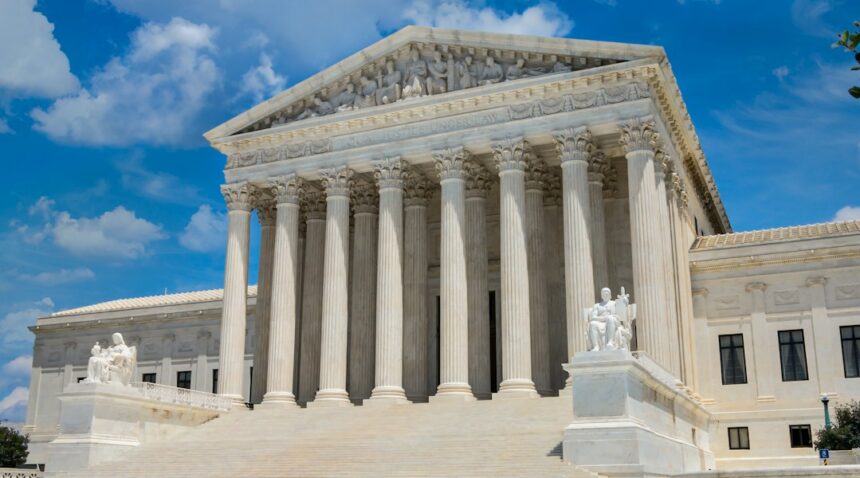
The U.S. Supreme Court on Thursday blocked Missouri from using a congressional map redrawn in 2025 to improve Republican prospects in November’s midterm elections, pausing a federal judge’s order that had required election officials to use the new boundaries.
The brief order was unsigned, provided no explanation and recorded no public dissents—an approach the Court commonly uses when resolving emergency applications. The justices granted a request from the map’s challengers to suspend U.S. District Judge Stephen Clark’s decision while the dispute continues.
Why the map is disputed
Missouri’s Republican-led legislature adopted the new map in 2025. The boundaries divided portions of the Kansas City-based district represented by Democratic Rep. Emanuel Cleaver and were designed to improve Republican prospects in seven of the state’s eight U.S. House districts.
Opponents organized by People Not Politicians collected more than 300,000 signatures seeking a statewide referendum on the map. Republican Secretary of State Denny Hoskins rejected the petition, arguing that Missouri’s referendum process did not apply to congressional redistricting.
The Missouri Supreme Court disagreed. It ruled that the petition was legal, sufficient and timely, and that the new map could not take effect unless voters approved it. The state court directed election officials to use the congressional boundaries enacted in 2022.
Conflicting court orders created uncertainty
The dispute became unusually complicated when Judge Clark issued a conflicting federal order requiring Missouri to use the 2025 map, which had already governed the state’s August primary election. A federal appeals court declined to block Clark’s order, sending the challengers back to the U.S. Supreme Court.
Thursday’s decision suspends Clark’s ruling and appears to clear the way for the older map to govern the November 3 general election. The underlying litigation has not ended, however, and Missouri officials must still address ballot preparation after holding the primary under different district lines.
Why the decision matters
The new map could have improved Republican prospects by one House seat at a time when control of Congress rests on a narrow margin. The ruling also resolves—at least temporarily—a direct conflict between state and federal court orders shortly before election deadlines.
A separate Missouri Supreme Court proceeding is considering whether Hoskins should be held in contempt for directing local election officials to proceed with the 2025 map despite the state court’s order.